A Tree Has Fallen on My Property in Newcastle — What Should I Do?
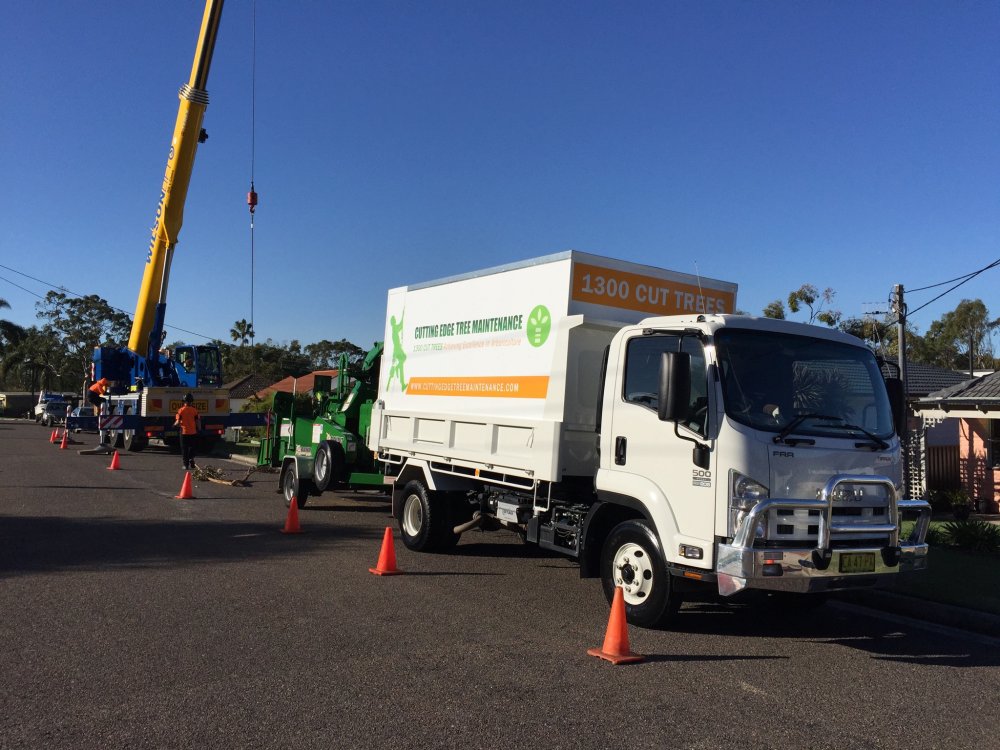
If a tree has fallen on your property in Newcastle or the Hunter, keep people away from the tree, check for fallen powerlines, call 000 if anyone is in immediate danger, and contact NSW SES on 132 500 if storm damage is threatening the property or blocking essential access. Once the immediate danger is controlled, photograph the damage, contact your insurer where necessary, identify whether the tree is private, neighbouring or public, and have the remaining tree structure assessed before further cutting begins.
A fallen tree can look like a straightforward clean-up job. From an arboricultural point of view, it often isn't.
The trunk may still be carrying considerable load. Broken branches can remain suspended in the canopy, partially uprooted root plates can move again after the trunk is cut, and timber trapped against a house, fence or another tree can release suddenly when its supporting section is removed.
What you do in the first few hours can also affect insurance evidence, council requirements and whether part of a damaged tree can safely be retained.
What should I do immediately after a tree falls?
The safest order is: protect people first, check for electrical hazards, control the immediate emergency, document the damage, then arrange the appropriate tree assessment or removal.
Protect people
Keep family, neighbours and pets away from the fallen tree and damaged canopy.
Check for electricity
Treat fallen or low powerlines as live. Do not approach a tree touching electrical wires.
Document the failure
Take photographs from a safe position before unnecessary clean-up changes the scene.
Assess before cutting
Establish what is supporting the tree and what could move when that support changes.
Arborist's view
The part of the tree already on the ground is not necessarily the greatest hazard. A split stem, hung branch or partially lifted root plate can still move after the initial failure. Before cutting, we want to know what is still carrying load and what will happen when that load changes.
How do I know if the fallen tree is still dangerous?
A tree can remain dangerous after the main failure, especially if branches are suspended, the trunk has split, the root plate has partly lifted or the tree is resting against another structure.
From a safe distance, look for:
- large branches hanging or caught in the canopy
- a split trunk that has not completely separated
- a tree that developed a new lean during the storm
- lifting soil or exposed roots around the base
- cracking around the root plate
- a fallen trunk resting against another tree
- branches suspended above a driveway, roof or footpath
- a remaining stem that is now heavily unbalanced
- fresh cracks or separation at major branch unions.
One mistake homeowners make after storms is focusing only on the timber already on the ground. A partially failed section still standing above it can represent a greater ongoing hazard.
If the tree has not completely failed, our hazardous tree assessment service explains how we assess potentially unsafe trees.
What if the tree has fallen onto powerlines?
Do not approach or touch a tree that is in contact with powerlines. Assume fallen electrical lines are live and stay at least 8 metres — approximately two car lengths — away.
Important: A tree touching a live conductor can itself become part of the electrical path. The hazard is not limited to the visible wire.
Do not:
- drag branches away from a powerline
- cut the tree with a chainsaw
- climb the tree
- touch a fence or object that may be in contact with the line
- assume a fallen line is safe because power in the house appears to be off.
For electricity network emergencies in Newcastle and the Hunter, contact Ausgrid on 13 13 88.
For current emergency guidance, see NSW SES.
Should I call NSW SES or a tree removal company?
Call NSW SES when the fallen tree is part of an active storm emergency. Call an arborist or professional tree contractor when specialist assessment, dismantling, removal or permanent clean-up is required.
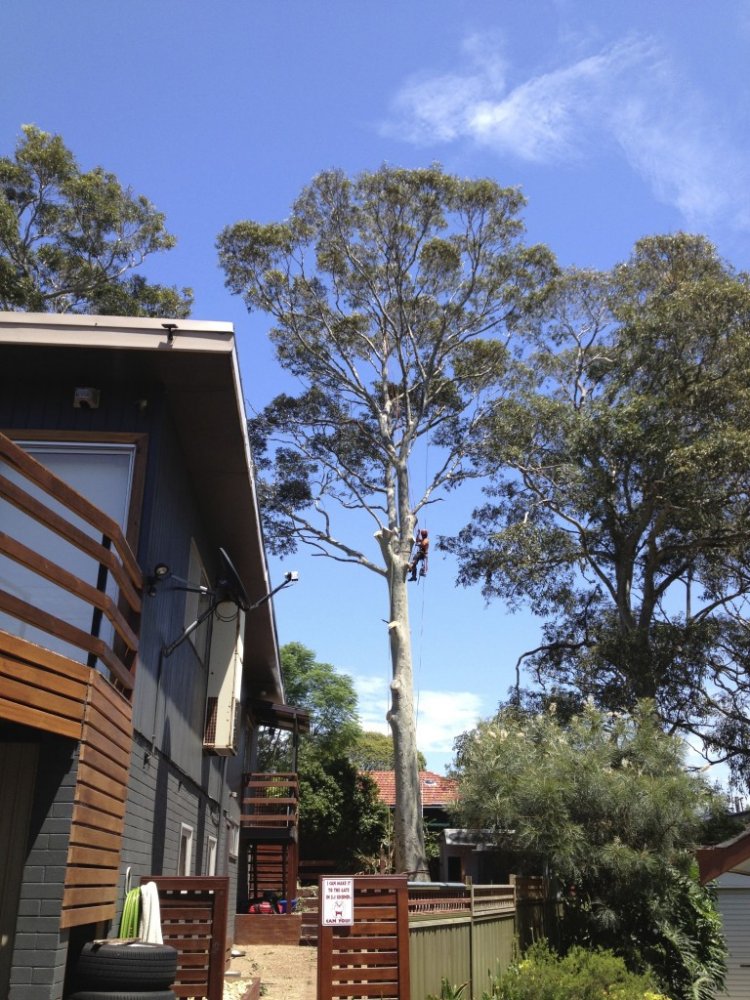
Call NSW SES on 132 500 when:
- a fallen tree has blocked the front door, driveway or road
- a tree is threatening to fall on the property or driveway
- storm damage has made part of the property unsafe
- there is storm damage you cannot safely manage yourself.
Call a tree professional when:
- a tree needs dismantling from a roof or structure
- large timber remains under tension or compression
- a branch is suspended above the property
- the tree has partially uprooted
- the remaining tree requires assessment
- large sections need controlled lowering.
Cutting Edge Tree Maintenance provides emergency tree removal in Newcastle and specialist storm-damaged tree removal throughout Newcastle and the Hunter.
Should I photograph a fallen tree before it is removed?
Yes, provided you can do so without entering the tree's potential fall or movement zone. Photographs can be useful for insurance, council documentation, arborist assessment and neighbour disputes.
Photograph:
- the entire tree and where it landed
- where the tree originally stood
- the stump or exposed root plate
- split or broken sections
- damage to buildings, fences, sheds or vehicles
- the property boundary if another property is involved
- visible cavities, decay or fungal growth
- nearby trees showing fresh movement or damage.
Practical advice
Photograph the failure before the tree is dismantled if that can be done safely. Once the trunk and branches have been cut into sections, the original failure mechanism can be much harder to establish.
Should I contact my insurance company before the tree is removed?
If insured property has been damaged, contact your insurer as early as practical after you have controlled the immediate danger.
Tell them:
- whether the tree is still resting on a building or vehicle
- whether NSW SES attended
- whether urgent tree work is required to prevent additional damage
- whether the tree originated on your land, neighbouring land or public land
- whether photographs of the original failure are available.
Insurance policies vary, so do not assume every tree-removal or debris-removal cost is automatically covered.
At the same time, don't leave an immediately dangerous tree in place simply because you are waiting for an insurer. Control the immediate risk first and document what you reasonably can.
What if my neighbour's tree fell onto my property?
In NSW, your neighbour is not automatically responsible for damage simply because the tree grew on their property. Responsibility can depend on the circumstances and whether the tree owner knew, or reasonably should have known, that the tree presented a danger.
The situation may be quite different where there was prior evidence of:
- advanced decay
- a significant trunk split
- progressive root failure
- an obviously unstable lean
- repeated major branch failures
- a previous arborist recommendation for urgent work.
If there may be a neighbour-tree dispute: preserve photographs, reports, quotations and relevant correspondence. Avoid unnecessarily destroying useful evidence during clean-up.
If a neighbour's tree has damaged your property:
- Make the area safe.
- Photograph the tree and damage.
- Contact your insurer.
- Speak with your neighbour.
- Keep relevant correspondence and previous reports.
- Obtain arboricultural advice if the cause or remaining risk is disputed.
See Legal Aid NSW's guidance on trees and neighbours for current legal information.
We also explain adjoining-tree issues in our guide to boundary tree law, overhanging branches and tree roots in NSW.
What if the fallen tree is a council or street tree?
If the tree originated from a road reserve, nature strip, park or other council-managed land, report it to the relevant council rather than arranging unauthorised work on the public tree.
Within the City of Newcastle, urgent fallen public trees or branches should be reported where they are:
- blocking roads or footpaths
- restricting driveway or property access
- resting on a house, fence or vehicle
- creating an immediate public safety risk.
The location of the canopy does not by itself establish ownership. When a tree is close to a boundary, the location of the trunk relative to the property boundary is more useful.
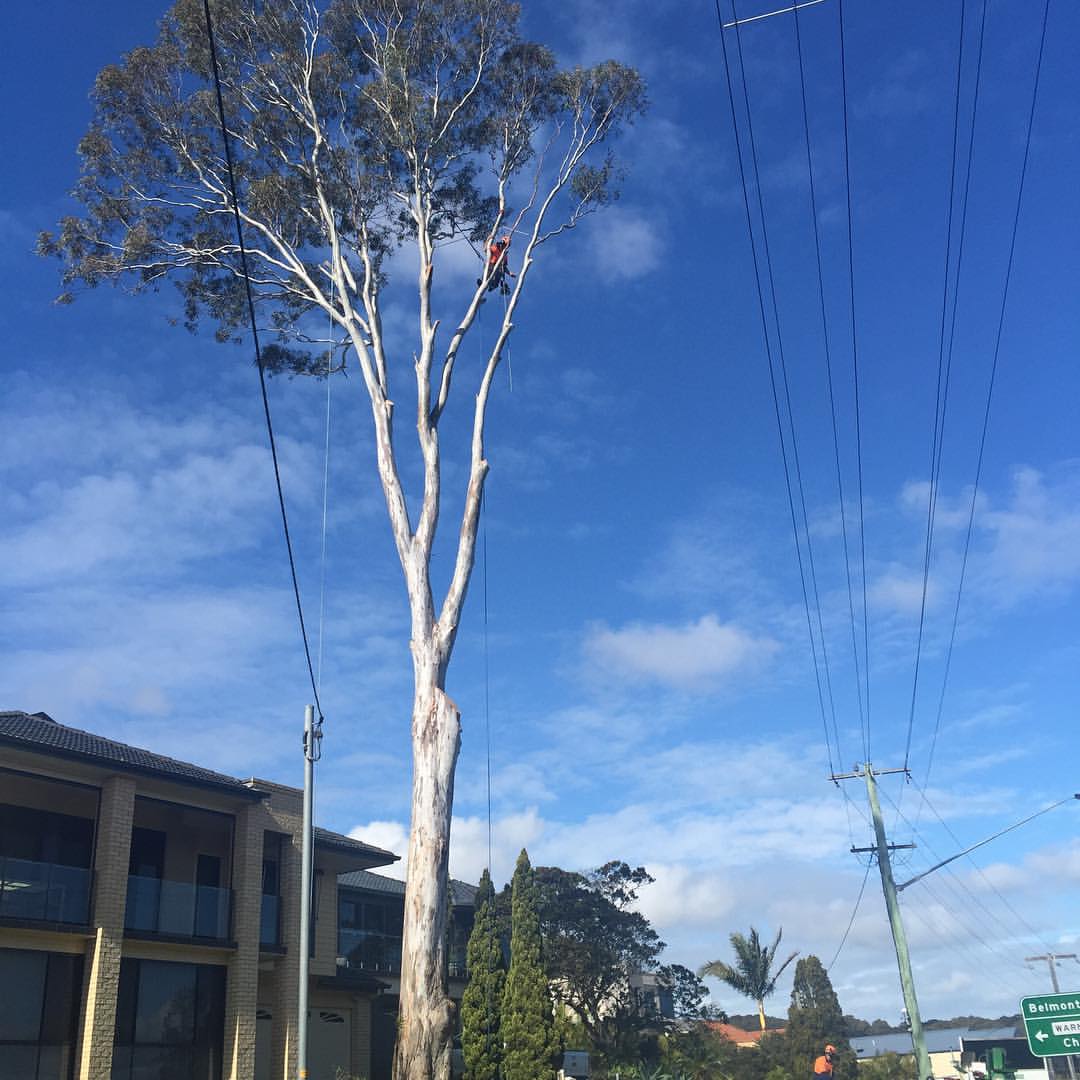
Cutting Edge Tree Maintenance provides professional arborist and tree removal services across Newcastle and the wider Hunter region.
Do I need council approval to remove a storm-damaged tree?
There is no single Newcastle and Hunter rule.
Emergency exemptions, evidence requirements and approval processes vary between council areas. Identify the LGA before assuming that storm damage automatically permits complete removal.
Newcastle, Merewether, Cooks Hill, Lambton, Mayfield and Warabrook
City of Newcastle has a specific process for a tree that presents an immediate risk to life or property because of a demonstrated sudden structural change caused by a severe storm or wind event.
The Report Storm Damage Tree Removal Form is used to document the reason for removal.
For qualifying private trees, you generally do not need to submit the completed form and supporting evidence to Council. However, if the storm-damaged tree is, or forms part of, a heritage item, you must submit the documentation to City of Newcastle within five working days of removal.
City of Newcastle Storm Damage Tree Removal Form
Tree Removal Merewether | Tree Removal Cooks Hill | Tree Removal Lambton | Tree Removal Mayfield
Charlestown, Cardiff, Warners Bay, Belmont, Swansea, Kotara and surrounding suburbs
Lake Macquarie has its own tree-preservation and approval framework. Do not assume the City of Newcastle storm-damage process applies unchanged across the council boundary.
For a genuine emergency, control the immediate hazard and keep photographs showing the tree's condition. Before undertaking additional non-emergency removal, confirm the current requirements applying to the property and tree.
Tree Removal Lake Macquarie | Arborist Lake Macquarie | Tree Removal Charlestown | Tree Removal Warners Bay
Maitland and surrounding districts
Maitland has its own permit and development requirements for regulated trees. Supporting photographs, arborist information or other evidence can be important where a tree has failed or become dangerous.
If storm damage has created an immediate hazard, document the original condition carefully and check the appropriate Council pathway before progressing beyond the work necessary to control the immediate danger.
Cessnock and the Hunter Valley
Cessnock City Council states that where a tree presents an imminent threat to human life or property, no permit is required, although Council may require evidence demonstrating that the tree presented that risk.
For dead, dying or dangerous trees that are not an immediate emergency, different requirements can apply, including arboricultural verification.
This makes photographs and professional documentation particularly valuable.
Port Stephens and Raymond Terrace
Port Stephens distinguishes between trees in danger of immediate failure and trees presenting a less immediate risk to life or property.
Because the evidence and notification pathway can change depending on urgency, photograph the tree before emergency removal where it is safe to do so and use Council's current Tree Removal and Pruning process.
Singleton
Singleton's vegetation controls include exemptions relating to certain dead or dying trees and trees that present a risk to human life or property.
Supporting documentation can still be important. On rural land, vegetation controls may also extend beyond ordinary residential council tree rules.
Muswellbrook and the Upper Hunter
Properties around Muswellbrook can involve a combination of residential, rural and environmental vegetation controls.
Deal with an immediate danger first. Before clearing additional trees or vegetation beyond the emergency work, confirm the planning, council or Local Land Services requirements applying to the property.
Does a storm-damaged tree always need to be removed?
No. Losing a large branch during a storm does not automatically mean the entire tree must be removed.
An arborist should treat the failure itself as evidence.
We want to understand:
- what part of the tree failed
- whether decay was present at the failure point
- whether the root plate moved
- how much live canopy remains
- whether a major co-dominant stem separated
- whether the remaining canopy is now significantly unbalanced
- what people or property are beneath the remaining tree
- whether corrective pruning can create an acceptable structure.
The question an arborist asks
Not simply: “Did part of the tree fall?”
Instead: “What does the way it failed tell us about the tree that remains?”
A healthy tree can lose a branch during exceptional weather without the rest of the tree becoming unacceptably dangerous.
At the other end of the spectrum, what looks like an isolated branch failure can expose substantial decay, including bark or structural weakness inside a major union.
Where retention is reasonable, appropriate tree pruning may be a better outcome than removing an otherwise viable tree.
Why do trees fall during Newcastle and Hunter storms?
A storm is often the trigger for tree failure, but it is not necessarily the underlying cause.
When assessing a failed tree, an arborist looks at the failure mechanism as well as the weather event.
Root plate failure
The tree overturns and lifts soil and roots around the base. Saturated ground can reduce anchorage while strong winds increase canopy loading.
Structural root decay
A tree can retain a relatively healthy-looking crown while significant deterioration develops around important structural roots or the lower stem.
Main stem failure
The trunk can fail where internal decay, cavities, old wounds or structural weaknesses have reduced its ability to withstand load.
Co-dominant stem failure
Two large upright stems can develop a weak attachment, particularly where included bark forms between them. One side may tear away during high winds, immediately changing the loading on the remaining stem.
Deadwood failure
Dead branches gradually lose flexibility and can become increasingly prone to breaking. Appropriate dead wooding can form part of proactive tree management where dead branches present a foreseeable target risk.
Extreme wind loading
Not every tree that fails was defective. A sufficiently severe weather event can overwhelm an otherwise healthy tree. This distinction can matter when considering the condition of nearby trees or investigating why a failure occurred.
Should I inspect the other trees after one tree falls?
Yes. If one significant tree has failed, check surrounding trees because they experienced the same wind, rainfall and soil conditions.
From a safe distance, look for:
- a new lean
- fresh soil cracking
- lifting roots
- broken or hanging branches
- split branch unions
- broken tops
- fresh trunk cracks
- branches caught in neighbouring crowns.
Experienced arborist's tip
The tree that is still standing can sometimes be the more important tree to inspect. Once one tree has already failed, attention naturally goes to the mess on the ground. A nearby tree with fresh root movement or a split union may represent the greater ongoing risk.
For properties containing multiple significant trees, such as strata complexes, schools, commercial properties or larger residential blocks, a structured tree risk assessment or tree management plan may be more useful than treating each incident separately.
Can I cut up a fallen tree myself?
Small branches lying freely on the ground are very different from a large storm-damaged tree that is still supporting weight.
Professional help is particularly important where timber is:
- bent or heavily loaded
- supporting another section of the tree
- trapped underneath the trunk
- suspended above the ground
- attached to a lifted root plate
- resting against a building
- interlocked with another tree.
Storm-damaged timber can be under considerable compression or tension. Once a cut changes the load path, a section can move, roll or release unexpectedly.
The same applies to a partially uprooted tree. Removing the weight of the stem can change what the root plate does next.
A useful rule: if you cannot clearly identify what is supporting the tree and what will move when that support is cut, do not make the first cut.
What about a large fallen gum tree?
Large eucalypts require particular care because of the weight of their timber, the size of their limbs and the possibility of additional branches remaining suspended after the initial failure.
Where a large gum has partially failed, an arborist will consider:
- whether the remaining main stem has been compromised
- whether decay contributed to the failure
- whether another co-dominant stem is now overloaded
- whether the root plate has shifted
- whether canopy loading has substantially changed
- whether broken limbs remain hung up overhead.
See our guide to large gum tree removal in Newcastle and our gum tree removal service.
What happens to the stump after a tree falls?
Stump work generally comes after the emergency has been made safe. It should not delay urgent work on an unstable tree.
If the tree has overturned, the exposed root plate may need to be managed as part of the removal.
If the trunk has snapped and a conventional stump remains in the ground, stump grinding can normally be dealt with separately.
Grinding may be worthwhile where the stump:
- prevents mowing or landscaping
- obstructs a driveway or path
- creates a trip hazard
- interferes with future construction
- occupies an area intended for replanting.
See our stump grinding service.
Fallen tree checklist for Newcastle and Hunter homeowners
- People: Is anybody injured or trapped? Call 000.
- Electricity: Are powerlines involved? Stay well clear and contact Ausgrid.
- Storm emergency: Is the tree blocking essential access or threatening the property? Call NSW SES on 132 500.
- Secondary hazards: Look for hanging limbs, split stems and root movement from a safe distance.
- Evidence: Photograph the original failure if it is safe to do so.
- Insurance: Contact your insurer where insured property has been damaged.
- Ownership: Determine whether the tree is private, neighbouring or public.
- Council: Check the emergency tree rules applying in your LGA.
- Assessment: Determine whether the whole tree requires removal or whether part can safely remain.
- Other trees: Inspect surrounding trees for fresh storm damage
Need a fallen tree assessed or removed?
Cutting Edge Tree Maintenance provides professional tree assessment and removal throughout Newcastle, Lake Macquarie, Maitland, Cessnock, the Hunter Valley, Port Stephens, Raymond Terrace, Singleton, Muswellbrook and surrounding areas.
A professional assessment should answer four questions:
- What is dangerous now?
- Why did the tree fail?
- What could fail next?
- What work is actually required to leave the property safe?
The objective is not simply to remove the most timber. It is to identify the actual hazard, control it safely and make a sound decision about the tree and property that remain.