When Is the Best Time to Prune Trees in Newcastle?
There is no single best month to prune every tree in Newcastle. The right timing depends on the tree species, its condition, why it needs pruning, flowering or fruiting cycles, the amount of canopy being removed and current weather conditions. Routine pruning can often be planned for a suitable seasonal window, but dead, broken or dangerous branches should be dealt with promptly regardless of the season.
When is the best time to prune my tree? This is a question many homeowners ask, but there isn't one universal pruning month that works for everyone. The right time to prune trees in Australia depends on:
- Tree species
- Tree condition
- Pruning objective
If you have a tree that needs attention but aren't sure when or how to prune it, this guide will help. Read on to learn when the best time is to prune trees in NSW, or call our professional Newcastle tree pruning team to do it for you!
| Tree or pruning situation | General timing guide | Main consideration |
|---|---|---|
| Spotted gums and eucalypts | Mild conditions | Keep pruning selective and avoid heavy canopy removal during heat or drought. |
| Jacarandas | After flowering | Avoid unnecessary heavy pruning and preserve the natural canopy form. |
| Crepe myrtles | Late winter | Prune before new spring growth begins. |
| Bottlebrushes and other flowering natives | Often after flowering or during suitable active growth | Species identification matters before pruning. |
| Dead, broken or dangerous branches | As soon as safety requires | Risk takes priority over the ideal seasonal pruning window. |
Why Does Pruning Time Matter?
Choosing the best time to prune trees in Newcastle matters because it helps your tree respond to the work with less stress and better regrowth. If you prune at the wrong time, it can:
- Remove developing flowers or fruit
- Encourage unwanted shoots
- Leave a tree with not enough foliage to survive
The weather also makes a difference. Pruning during extreme heat or drought can put a lot of strain on your tree.
Arborist's view
The calendar is only one part of the decision. Before recommending pruning, a qualified arborist also considers the species, tree vitality, branch structure, the amount of live foliage being removed and what the pruning is intended to achieve.
When Should Trees in Newcastle Be Pruned?
There is no one-size-fits-all answer for the best time to prune trees in NSW. The right timing depends on several factors. So before starting any pruning work, think about these:
Tree species
Different Newcastle tree species respond differently to pruning. Spotted gums need minimal, selective pruning, avoiding heavy canopy removal during heat or drought. Jacarandas are pruned after flowering to preserve blooms, while crepe myrtles are pruned in late winter before new spring growth begins. This is why identifying the species first is really important before deciding when to prune.
Tree condition
A healthy, actively growing tree will respond differently to pruning than one that is already affected by drought, disease, root damage or declining vitality. A stressed tree requires a careful pruning approach.
If poor health rather than ordinary canopy growth is the concern, our tree diagnostics and treatment service can help determine whether pruning is the appropriate response.
The pruning objective
When to prune also depends on why you're pruning. Removing deadwood, improving clearance, correcting young-tree structure and reducing branches are all very different objectives. The right time to prune your tree should support your desired result while avoiding unnecessary stress or excessive regrowth.
Flowering or fruiting cycles
Knowing what kind of tree you're dealing with, and when it flowers or develops fruit, is another key factor in knowing when to prune a tree in Australia. Pruning at the wrong stage could remove flower buds or developing fruit.
Weather conditions
Pruning is best avoided when a tree is already experiencing environmental stress such as drought or extreme heat. The NSW Government Department of Primary Industries notes that pruning time should be reconsidered during drought. Wet, windy, or stormy conditions also make tree pruning work unsafe.
The amount of live canopy being removed
Removing a small number of selected branches is very different from carrying out a large canopy reduction. The more healthy foliage being removed, the more carefully the timing needs to be considered. If extensive pruning is genuinely needed, completing the work in stages is better for the tree.
If the work is urgent
Safety takes priority over timing. A broken, hanging or unstable branch needs to be dealt with promptly and not left for your scheduled pruning time. After a storm or sudden tree damage, our qualified arborists can assess what requires immediate attention and what pruning work can be safely postponed.
Does the Reason for Pruning Change the Best Time?
Yes. The purpose of the pruning can be just as important as the season. A tree being pruned for flowering, young-tree structure or routine clearance does not necessarily need the same timing as a tree with hazardous deadwood or fresh storm damage.
Flowering
Time pruning around the species' flowering cycle so developing buds are not unnecessarily removed.
Young-tree structure
Use gradual corrective pruning while branches are still small rather than waiting for major structural problems to develop.
Routine canopy work
Choose conditions that suit the species, tree health and amount of live canopy being removed.
Safety pruning
Dead, broken, hanging or unstable branches should not be left simply because the ideal seasonal window has not arrived.
Does the Type of Tree Pruning Affect the Timing?
Yes. Different pruning methods solve different problems, so the ideal timing can also change. The aim should be to remove only the branches necessary to achieve a clear arboricultural objective.
Deadwooding: Dead branches that create a foreseeable risk can be removed when required. Learn more about professional deadwooding.
Formative pruning: Young trees can be selectively pruned to encourage well-spaced, structurally sound branches before defects become larger.
Clearance pruning: Selected branches may be removed where they conflict with buildings, paths or access, while retaining as much healthy canopy as practical.
Canopy reduction: More extensive live-canopy removal needs careful assessment because species, tree condition and environmental stress become increasingly important as more foliage is removed.
When Is The Best Time To Prune Flowering Trees?
The best time to prune flowering trees in Newcastle depends on when they produce their flowers.
Trees that bloom on growth formed the previous season, such as camelias, should be pruned soon after flowering. This gives the plant time to produce new buds for the next season and helps avoid accidentally removing next year's flowers.
Trees that flower on new growth, such as hibiscus, can be pruned earlier, before active growth begins.
When To Prune Australian Native Trees
The best time to prune Australian native trees in NSW depends on:
- Species
- Growth habit
- Reason for pruning
Many native trees, including bottlebrushes, banksias and NSW Christmas bush, respond well to light pruning after flowering or during periods of active growth.
It's important not to remove excessive live canopy, especially during drought, extreme heat, or other stressful conditions. Some native trees react poorly to hard pruning, so identify your tree correctly before deciding how much to remove and when.
When Should Gum Trees Be Pruned?
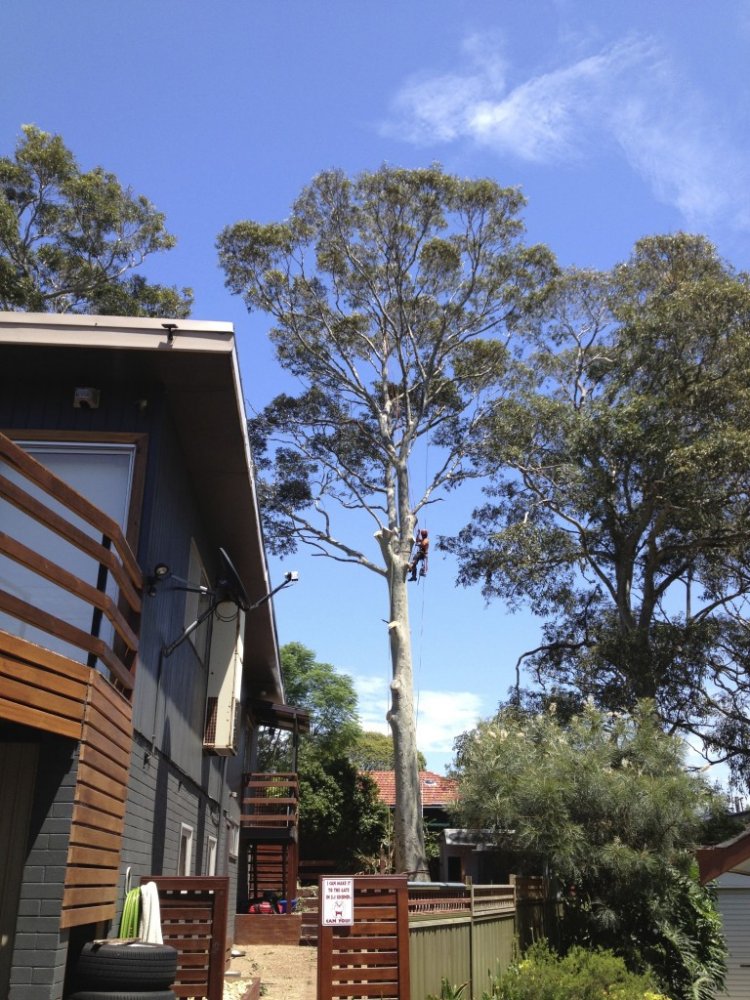
The best time to prune gum trees depends on the species, tree condition and the type of work being done. In Newcastle and across NSW, eucalyptus trees are pruned when conditions are mild, and the tree isn't under drought or heat stress.
Because mature gum trees are usually large and structurally complex, pruning should be planned very carefully to avoid excessive canopy loss and stress.
For large mature gums, pruning may also overlap with dead wooding, structural assessment or longer-term tree care.
When To Remove Dead Or Dangerous Branches
Dead, hanging, broken or otherwise dangerous branches should be removed as soon as they present a risk to people, buildings, vehicles or other parts of the tree. Unlike routine tree pruning, hazardous branch removal should never be put off for the ideal time. SafeWork NSW Code of Practice for Tree Works advises that deadwood, cavities and damaged branches can affect tree stability and should be identified early during a tree risk assessment. In Newcastle, urgent tree pruning should be carried out safely by a qualified arborist.
If you are unsure whether a branch or tree represents a genuine risk, a hazardous tree assessment can help identify the defect, potential targets and appropriate management response.
Pruning Trees After Storms
After a storm, trees should be inspected for:
- Broken branches
- Hanging branches
- Partially detached branches
- Split limbs
- Structural damage
Hazardous branches will need immediate removal, while non-urgent pruning can wait until the tree has been properly assessed. Many homeowners make the mistake of doing heavy pruning because a tree looks untidy after bad weather, but this is often unnecessary.
If you need emergency tree removal, contact us immediately on 02 4003 4400!
If you have a large tree or damage near homes, roads or power lines, contact our qualified arborists for a hazardous tree assessment, and we'll help you determine the safest approach.
Learn more in our guide, Tree Risk Assessments Explained!
For trees affected by severe weather, you can also read about our storm-damaged tree removal service in Newcastle.
When to Prune Young Trees
Young trees are best pruned gradually during their early years, so they develop a strong, well-spaced branch structure. Structural pruning removes weak, crossing or poorly attached branches before they become larger problems. Excessive canopy removal should be avoided with younger trees.
The best time to prune young trees in Newcastle depends on the species and growth cycle, but light corrective pruning is easier while branches are small. Early pruning reduces the need for heavier tree pruning later!
When to Prune Mature Trees
Mature trees should only be pruned when there is a clear reason such as:
- Removing deadwood
- Improving clearance
- Correcting structural defects
- Reducing risks
The best time to prune mature trees in Australia will vary based on the species, tree health and the amount of live canopy being removed. Heavy pruning should be avoided where possible, as older trees are less resilient to canopy loss.
If the decision is whether a mature tree should be retained and pruned or removed entirely, see our guide to tree removal vs pruning.
What Happens When Trees Are Over-Pruned?
Pruning at the wrong time can cause issues, but so can over-pruning. Depending on the species and severity, over-pruning can lead to:
- Excessive stress
- Weak, rapid regrowth
- Sunburn on exposed branches
- Reduced flowering or fruiting
- Poor structure
- Increased susceptibility to pests and disease
Where a tree is already stressed, declining or showing unusual canopy symptoms, professional tree diagnostics can help determine whether further pruning would improve the tree or create additional stress.
Do Newcastle Tree Pruning Rules Affect When You Can Prune?
Sometimes. The condition and size of the tree, the amount of pruning proposed and its location can affect what documentation is required.
City of Newcastle advises that a permit is not required for most private-tree pruning, but a Tree Pruning Specification can be required in particular circumstances. For relevant trees, the specification needs to be prepared by an appropriately qualified arborist and pruning must be carried out in accordance with the specification and AS4373-2007.
Before carrying out major work on a significant tree, check the current City of Newcastle Tree Pruning Specification requirements.
This is another reason that deciding when to prune is not purely a seasonal question. The species, size of the tree, pruning objective and amount of canopy being removed all need to be considered.
What is The Best Season To Prune Trees in NSW?
There is no single best pruning season for every tree in Australia. But here are some general pruning rules for each season:
Summer
Light pruning can be suitable, but avoid heavy canopy removal during extreme heat or dry conditions.
Autumn
Can suit some species, but flowering and growth cycles still need to be considered.
Winter
Often useful for suitable deciduous species and structural inspection while growth is reduced.
Spring
Can encourage vigorous growth, but poor timing can remove flowers or new growth.
Pruning trees in summer
Can you prune trees in summer? Yes, but heavy pruning or major canopy removal should be avoided in extremely hot or dry conditions. Light pruning is best in summertime
Pruning trees in autumn
Autumn pruning is suitable for some species. But timing should consider flowering, growth and seasonal conditions.
Pruning trees in winter
Can you prune trees in winter? Yes, winter is an excellent time for pruning suitable species such as deciduous trees, as they are dormant and easier to access.
Pruning trees in spring
Spring is a good time for pruning as it encourages vigorous growth, but if it's poorly timed, you could remove flowers or new growth.
Not sure when your tree should be pruned? Our qualified tree pruning team can assess the species, condition and pruning objective before recommending the right approach. Contact us on 02 4003 4400 for safe, professional tree pruning in Newcastle.
When Should An Arborist Prune A Tree?
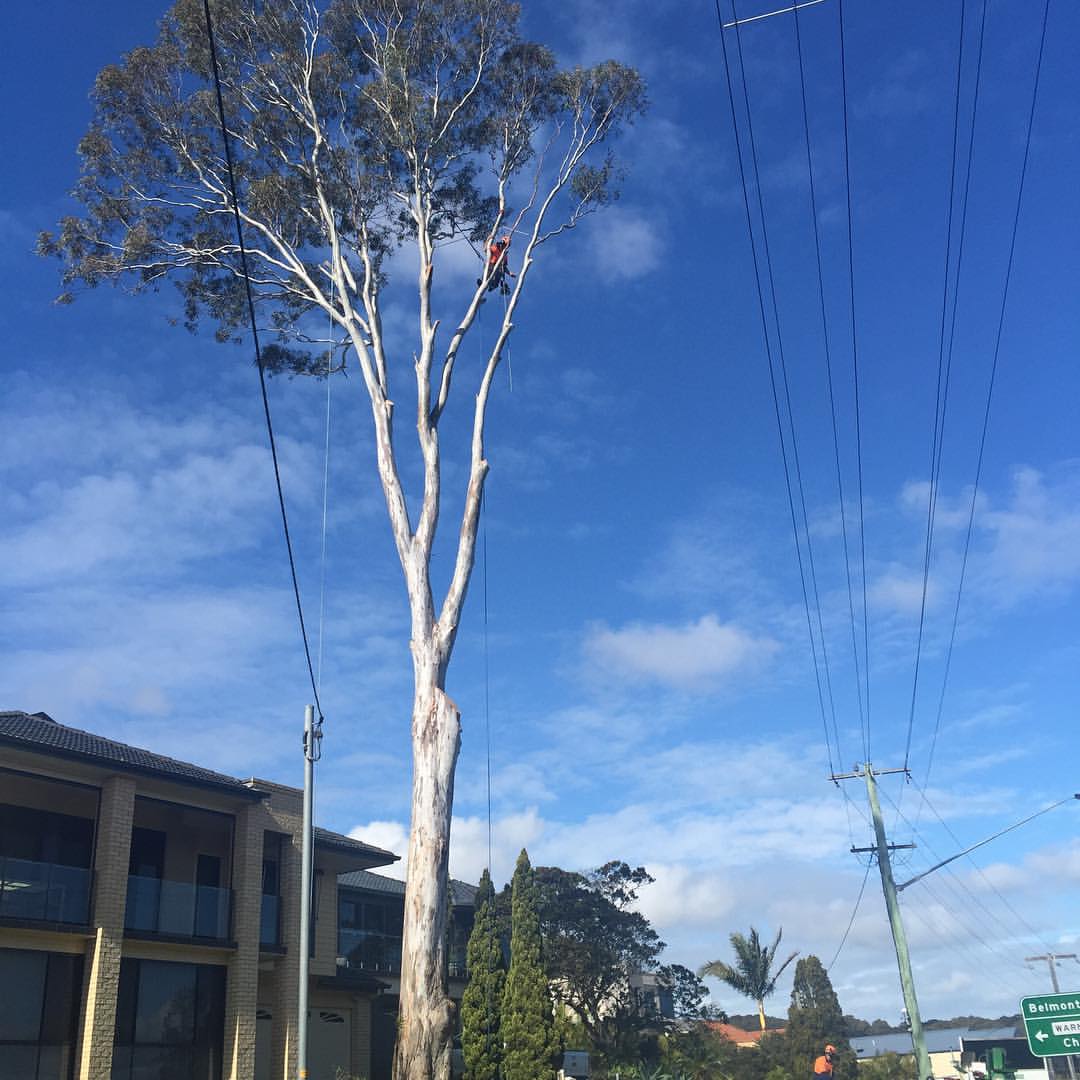
A qualified Newcastle arborist should prune a tree when the work involves:
- Large branches
- Structural defects
- Significant canopy reduction
- Potential risks to people and property
For complex trees, an AQF Level 5 consulting arborist can provide a higher-level assessment of tree health, structure and risk. Level 5 corresponds to an AHC50524 Diploma of Arboriculture and includes a wide range of skills, including diagnosing tree defects and recommending canopy management.
In Newcastle, professional tree assessment is extremely valuable for mature, damaged or potentially hazardous trees.
Get A Free Newcastle Tree Pruning Quote
Need professional tree pruning in Newcastle? Cutting Edge Tree Maintenance provides free, transparent quotes and arborist-led pruning advice based on your tree's species, condition and location.
Newcastle homeowners trust us for:
- AQF Level 5 arborist-led team
- 10+ years of experience
- Fully trained & insured workers
- $20M Public liability cover
- Professional equipment
- Safe work practices
- Expert local knowledge
Send us your name, phone number, property address and a short description of the tree work needed. For the most accurate quote possible, include photos showing the tree, site access and any nearby buildings, fences or power lines.
If your tree is damaged or presents an immediate safety concern, call us directly on 02 4003 4400 for 24/7 emergency tree services.
Newcastle Tree Pruning FAQs
How much does tree pruning cost in Newcastle?
The cost of tree pruning in Newcastle depends on the tree size, branch diameter, equipment required and complexity of the work. Pruning near buildings, powerlines, or restricted access areas will also factor into the final price. Contact CETM for a free, scoped quote!
Is it safe to prune my own trees?
Small, low-level pruning might be manageable, but climbing, chainsaw work and large branches could cause serious injury or property damage. SafeWork NSW recommends hiring a professional for tree work, especially when height, heavy limbs, or other hazards are involved.
What's the difference between tree pruning and tree lopping?
Tree pruning selectively removes branches to improve structure, clearance, health or safety. Tree lopping or topping removes substantial sections of the canopy without the same selective approach. City of Newcastle council discourages lopping and topping because they can damage trees and increase failure risk.
For more information on the difference between selective arborist pruning and indiscriminate cutting, see our tree loppers Newcastle guide.
How often should trees be pruned?
There is no fixed schedule for tree pruning. Species, health, maturity, weather and growth rate all factor into when your tree should be pruned.
Are there rules for pruning trees in Newcastle?
Yes. Tree pruning in Newcastle must comply with City of Newcastle requirements and AS4373-2007. Depending on the tree, the extent of pruning, and its protected status, you might even need a pruning specification or additional approval before work begins. At CETM, we can help you navigate council requirements to carry out pruning work legally and safely.