Tree Pruning
Professional tree pruning is not simply a matter of shortening branches. Every cut changes how a tree distributes weight, produces new growth, responds to wind and manages exposed tissue.
Cutting Edge Tree Maintenance provides tree pruning in Newcastle for homeowners, strata properties, businesses and organisations that want to improve clearance, remove hazardous deadwood, manage growth or retain suitable trees responsibly.
Our work is led by an AQF Level 5 arborist and completed by trained tree workers using pruning methods selected for the individual tree and the purpose of the work.
- Tree pruning, deadwooding and canopy management
- Clear recommendations based on the tree’s condition and location
- Pruning around homes, driveways, paths and other property features
- Work planned with tree health, safety and future growth in mind
- Free, clearly scoped quotes
Call our Newcastle arborists on 02 4003 4400 for a free tree-pruning quote.
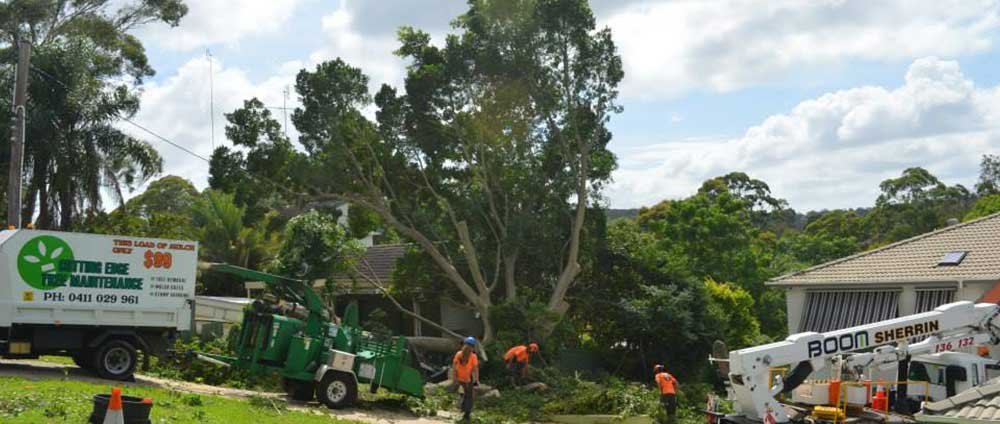
Professional Tree Pruning Services in Newcastle
Pruning should address a defined problem or management objective. It should not involve removing branches simply because they can be reached or because a tree appears large.
Before recommending work, our arborist considers:
- The species and expected response to pruning
- The tree’s age, vitality and overall condition
- Branch attachments and canopy structure
- Deadwood, cracks, damage or signs of decay
- Previous pruning and resulting regrowth
- The amount of live canopy that may be removed
- Nearby homes, paths, driveways and other property features
- The customer’s desired outcome
This allows us to recommend the least amount of work necessary to achieve an appropriate result.
Deadwooding
Deadwooding removes selected dead branches from the canopy.
The appropriate scope depends on branch size, tree location and what lies beneath it. A tree in an isolated section of a property may require different management from a tree above a home, school entrance, driveway, playground or outdoor seating area.
Not every small dead twig needs to be removed. The work should focus on dead branches that create a relevant concern or interfere with the intended use of the site.
Learn more about our professional deadwooding service.
Crown Reduction
Crown reduction decreases the height or spread of a canopy by shortening selected branches back to suitable lateral growth points.
It may be considered where a tree requires greater separation from a building, has long branches extending into an unsuitable area or needs careful weight reduction.
Correct crown reduction retains as much natural structure and healthy foliage as practicable. It should not leave a canopy of large stubs or involve indiscriminately cutting off the top of the tree.
Crown Lifting
Crown lifting creates clearance by removing selected lower branches.
It may be used to improve access above:
- Driveways
- Pedestrian paths
- Roofs and gutters
- Parking areas
- Sightlines
- Outdoor living areas
The age, height and structure of the tree must be considered. Removing too much lower canopy can affect trunk development and leave the tree visually or structurally unbalanced.
Selective Crown Thinning
Selective thinning removes a limited number of smaller branches from appropriate positions within the canopy.
It may be used to address localised canopy density, remove crossing branches or improve light penetration in a particular area.
Excessive thinning can expose remaining branches, encourage unwanted regrowth and concentrate foliage at the ends of limbs. The inner canopy should not be stripped out.
Formative and Structural Pruning
Young trees often respond well to early corrective pruning.
Small, carefully positioned cuts can help manage:
- Competing leaders
- Poorly positioned branches
- Closely spaced branch unions
- Future clearance conflicts
- Damaged or rubbing branches
- Unbalanced early growth
Correcting these issues while branches are small is generally less disruptive than removing large mature limbs later.
Read our guide to young-tree and formative care.
Clearance Pruning
Clearance pruning creates practical separation between a tree and a structure or access route.
This may involve branches growing towards:
- Roofs and gutters
- Walls and windows
- Fences
- Driveways
- Paths
- Neighbouring property
The work should target the actual conflict rather than cutting the entire side of the tree indiscriminately.
Corrective Pruning
Corrective pruning may be considered where a tree has developed damaged branches, poor regrowth or structural problems following storms, previous pruning or branch failure.
Not every defect can be corrected in one visit. Some trees require staged pruning so that excessive live canopy is not removed at once.
Palm Pruning
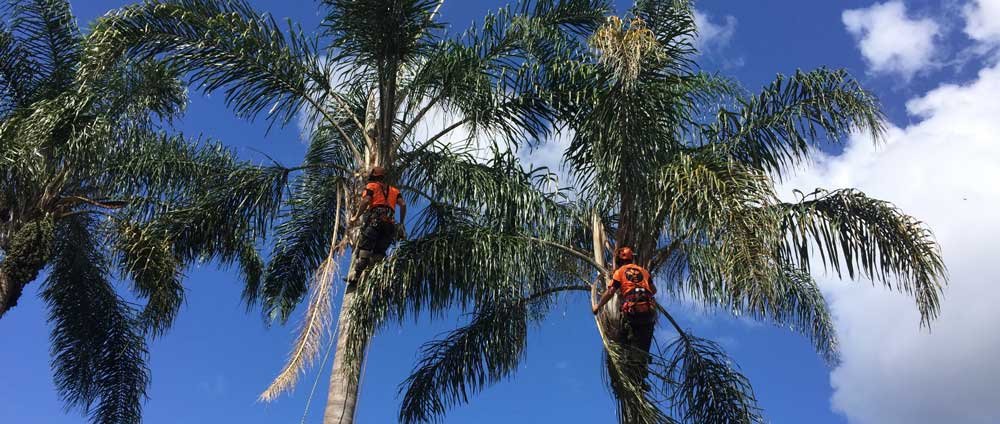
Palm maintenance may involve removing dead or declining fronds, flower stalks or fruit clusters where they create a concern.
Healthy green fronds should not be removed unnecessarily. Excessive removal can reduce the palm’s ability to produce energy and may affect its appearance and health.
Why We Do Not Recommend Topping
Topping removes large portions of the canopy without regard to natural branch structure.
It can:
- Leave large wounds that are difficult for the tree to manage
- Remove a substantial proportion of the tree’s leaf area
- Reduce the tree’s ability to produce energy
- Trigger dense, rapidly growing shoots
- Create regrowth with weaker attachments
- Expose previously shaded branches and bark
- Increase future maintenance requirements
- Damage the tree’s natural form
A topped tree may appear smaller temporarily, but the resulting regrowth can create new structural and maintenance concerns.
Where size management is required, our arborist will consider whether selective crown reduction is practical. In some cases, the desired reduction cannot be achieved without causing unacceptable damage, and another management option may be required.
Customers who commonly call branch cutting “tree lopping” can learn more on our Tree Loppers Newcastle page.
How We Plan Tree Pruning
1. Identify the Objective
We begin by establishing what the pruning needs to achieve.
The objective may be to remove deadwood, improve clearance, reduce a selected branch, correct young-tree structure or manage storm damage.
2. Inspect the Tree
We assess the tree’s species, condition, canopy structure, previous pruning and visible defects.
3. Consider the Surrounding Property
We identify nearby buildings, fences, gardens, pools, paths, driveways, overhead services and neighbouring property that may affect the work method.
4. Determine the Appropriate Cuts
The proposed scope should identify which branches or canopy areas require attention and what should remain.
5. Prepare a Clear Quote
The quote explains the agreed pruning work, access requirements and what will happen to branches and debris.
6. Complete the Work
Our team completes the pruning using climbing, cutting and controlled-lowering methods suited to the tree and site.
7. Clean the Work Area
Branches and debris are processed according to the agreed quotation, and the site is left tidy.
How Much Live Canopy Should Be Removed?
There is no percentage that is suitable for every tree.
The amount of live canopy that can be responsibly removed depends on:
- Species
- Age
- Tree vitality
- Canopy density
- Previous pruning
- Branch size
- The time of year
- The reason for pruning
- Environmental stress
Excessive canopy removal can reduce energy production, expose branches to additional sunlight, encourage dense regrowth and place unnecessary stress on the tree.
Professional pruning is normally conservative and targeted. Where substantial work is needed, staged pruning may be preferable to removing too much at once.
When Is the Best Time to Prune?
There is no single pruning season that is best for every Newcastle tree.
Timing depends on:
- Tree species
- Tree condition
- The pruning objective
- Flowering or fruiting cycles
- Current weather conditions
- The amount of live canopy being removed
- Whether the work is urgent
Dead, broken or hanging branches may require prompt attention regardless of season.
Formative pruning may be scheduled while branches are still small. Some flowering or fruiting trees are best pruned at a particular stage of their growth cycle. Stressed or declining trees may require a more conservative approach.
Our arborist can recommend timing after identifying the tree and understanding why it needs pruning.
Pruning Damaged or Declining Trees
Pruning can help some damaged trees, but it cannot resolve every structural or health problem.
A tree with limited branch damage may be retained after damaged limbs are removed and the remaining canopy is assessed.
Further investigation may be required where there is:
- Major trunk splitting
- Visible root movement
- Significant decay
- Large cavities
- Widespread canopy decline
- Multiple branch failures
- Damage following excavation or construction
Where the concern extends beyond normal pruning, learn more about our hazardous-tree assessments or tree diagnostics and treatment.
Tree Pruning Near Homes and Property
Many Newcastle properties have mature trees growing close to homes, garages, fences, pools and neighbouring buildings.
Branches may require controlled lowering where they cannot be safely dropped. The method depends on branch size, weight, access and what lies beneath the canopy.
When requesting a quote, tell us about:
- Buildings or sheds beneath the tree
- Pools and established gardens
- Restricted driveway or side access
- Overhead powerlines
- Neighbouring property
- Areas that must remain accessible
- Recent storm or branch damage
Photographs showing the whole tree, problem branches and access route can help us understand the likely scope.
Newcastle Council Pruning Requirements
Tree-pruning requirements depend on the property, tree and proposed work.
Property owners should not assume that all pruning is exempt simply because a tree is located on private land. Protected vegetation, heritage requirements, development approvals and public trees may require different processes.
City of Newcastle requires private-tree pruning to be consistent with its current planning controls and Urban Forest Technical Manual. Depending on the tree and scope of work, a pruning specification or appropriately qualified arborist may be required.
Requirements may differ in Lake Macquarie, Port Stephens, Maitland and surrounding council areas.
Our arborists can provide practical information about the proposed work, but the relevant council determines whether approval or documentation is required.
Read our guide to tree-removal and pruning requirements in Newcastle and Lake Macquarie.
Why Choose Cutting Edge Tree Maintenance?
Qualified Arborist Oversight
Our pruning work is led by an AQF Level 5 arborist, allowing complex tree concerns to be assessed before major cutting begins.
Tree-Focused Recommendations
We consider the long-term effect of pruning rather than focusing only on the tree’s immediate appearance.
Clear Work Scopes
We explain which branches or canopy areas are included, what outcome the pruning is intended to achieve and any practical limitations.
Professional Equipment
Our team uses professional climbing, cutting, rigging and processing equipment suited to the tree and surrounding property.
Care Around Your Property
We plan work around roofs, gardens, pools, fences, paths, driveways and neighbouring property.
Fully Insured Tree Workers
Our tree workers are insured, and relevant business documentation can be provided where required.
What Our Newcastle Customers Say
“John and his team were fantastic! From a prompt quote to scheduling the work and showing up when they said they would, they were reliable, efficient and highly professional. John and his team were helpful in their suggestions on pruning and which trees were best to leave and which ones would cause future problems. Our backyard looks fantastic, all the branches were cleaned away without any trouble and we will absolutely use their services again in the future.” — Colin Irvine, May 2022
Tree Pruning Newcastle FAQs
Will Pruning Make My Tree Safer?
Pruning can address specific concerns such as deadwood, damaged branches, poor clearance or excessive branch length.
It cannot guarantee that a tree will never fail. Tree condition, root stability, weather and concealed defects also affect risk.
How Much of a Tree Can Be Removed?
There is no suitable percentage for every tree.
The amount depends on species, age, vitality, structure, previous pruning and the objective of the work. Excessive live-canopy removal can stress a tree and produce unwanted regrowth.
Can You Prune Branches Near Powerlines?
Work near electrical infrastructure requires specific clearances, qualifications and coordination.
Do not approach or cut branches near powerlines yourself. Tell us about the lines when requesting a quote so the situation can be assessed appropriately.
Can Pruning Save a Damaged Tree?
Sometimes. A tree with limited branch damage may be retained after corrective pruning.
A tree with major trunk splitting, root movement or extensive decay may require further assessment. We will explain what pruning can and cannot achieve.
Can You Reduce the Height of My Tree?
Some trees can be reduced using selective crown-reduction cuts.
The achievable reduction depends on the species, tree condition, canopy structure and availability of suitable lateral branches. Excessive height reduction can damage the tree and create unstable regrowth.
Can You Prune Branches Hanging Over a Neighbour’s Property?
Possibly, but tree ownership, access, council requirements and the effect on the whole tree should be considered first.
Permission may be required to enter the neighbouring property. Pruning should not leave the tree unstable or unnecessarily damaged.
Read our guide to overhanging branches and boundary-tree responsibilities.
How Much Does Tree Pruning Cost?
Pricing depends on:
- Tree height and canopy size
- Branch size and weight
- Access
- Nearby buildings and property
- Required climbing or access equipment
- Controlled-lowering requirements
- Debris handling
- The amount and complexity of the work
Send photographs of the whole tree, trunk, access area and nearby structures to help us assess the job.
What Happens to the Pruned Branches?
Branches are normally chipped or removed according to the agreed quotation.
Larger timber may be removed, cut into manageable sections or left onsite, depending on the agreed scope.
Get a Free Tree-Pruning Quote
Send us photographs showing the whole tree, the branches that concern you, the access route and nearby structures.
Explain what outcome you want, such as roof clearance, deadwood removal, canopy reduction or improved access.
Call 02 4003 4400 for practical advice and a free tree-pruning quote in Newcastle.