Benefits of Tree Removal
This guide is written by working arborists in Newcastle and Lake Macquarie. It covers the real benefits, the hidden ones most people never consider, and a simple scorecard to help you decide.
- Removing a real failure risk over people, homes or cars
- Stopping ongoing damage to foundations, pipes, paving and roofs
- Ending recurring pruning, clean-up and repair costs
- Stopping disease or pests spreading to other trees
- Freeing space, light and solar output, and making room to plant the right tree
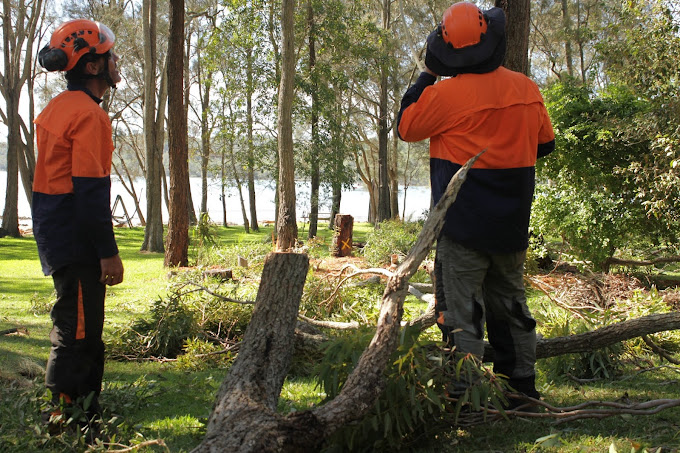
1. You remove a real, measurable risk
Arborists don't call a tree "dangerous" on gut feel. A proper tree risk assessment weighs three things:
A large dead limb over an unused back corner is a low risk. The same limb over a bedroom is not. The benefit of removal is only as big as the risk it removes. That's why a hazardous tree assessment comes before the chainsaw. Sometimes a single limb removal or dead wooding gets you most of the safety benefit at a fraction of the cost.
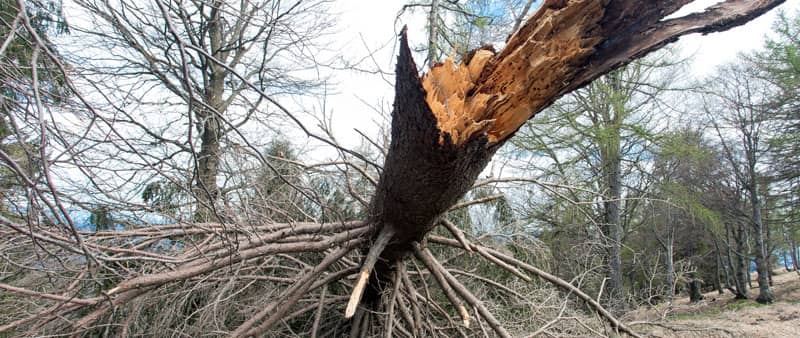
Red flags that usually shift the balance towards removal: fungal brackets or mushrooms at the base, a new lean with soil heaving, deep cracks through a main union, hollow sounding when the trunk is tapped, or a tree that's more than about half dead. Our guide to signs a tree is dead or dying covers these in detail.
2. You stop damage to your home, pipes and paving
Roots rarely "break" concrete by brute force. In Newcastle, damage more often comes from roots drying reactive clay soils under footings, which causes uneven movement and cracking, and from roots finding existing cracks in old terracotta sewer lines. We see it regularly in older suburbs with clay soils and original pipework across Newcastle and Lake Macquarie.
Removing a problem tree can stop ongoing damage. But be aware that removing a very large tree on reactive clay can also cause soil heave as moisture returns. With big trees close to footings, we sometimes recommend staged reduction or engineering advice first. More here:
- Can tree roots damage house foundations?
- Tree roots damaging pipes in Newcastle
- Tree roots and property damage
3. You stop paying for the same problem every year
This is the benefit almost nobody calculates. Some trees in the wrong spot cost money every year: regular pruning off the roof, gutter cleaning, cleaning leaf litter out of the pool, lifting pavers, plumber call-outs. Compare that recurring cost against a one-off removal and replanting:
If the tree is healthy and well placed, keeping it almost always wins. Mature trees add value and shade that a young replacement takes decades to match. But for a tree that's wrong for its spot, such as a camphor laurel over a sewer line or a cocos palm dropping fronds on a pool, removal can pay for itself within a few years.
4. You protect the rest of your garden
Some problems spread. Removing one infected tree can protect the others:
- Armillaria root rot (honey fungus) spreads through roots and infected wood. Removing the stump and major roots matters here, not just the trunk.
- Cypress canker moves through hedges. Losing one plant early can save the row.
- Termites, especially Coptotermes, nest in the trunks and root crowns of eucalypts and other trees. A nest close to the house is a pest risk you should have inspected.
- Environmental weeds like camphor laurel, privet and Chinese tallow spread seed into bushland. Camphor laurel and Chinese tallow are on City of Newcastle's exempt species list (within size limits) for exactly this reason.
Not sure what's wrong with your tree? Our tree doctor service can identify the cause before you decide.
5. You get your light, space and solar back
A tree that shades your solar panels for most of the day reduces what they generate. A dense canopy over the backyard means bare, mossy lawn and a damp side of the house. Removing (or thinning) the right tree can:
- bring back sun for lawns, veggie gardens and solar panels
- dry out damp walls, decks and paths where mould is a problem
- free up room for a granny flat, pool, shed or extension, which often makes removal part of a DA anyway
- open up views, a big selling point in Merewether, Bar Beach, Warners Bay and around the lake
Tip: before removing a whole tree for light, ask about crown thinning or crown lifting. Done to AS 4373, it can solve light problems while keeping the tree.
6. You reduce bushfire and storm exposure
On bushland edges around Lake Macquarie, Port Stephens and the western suburbs, trees hanging over the roof add fuel and ember traps right where you don't want them. In designated areas, the NSW RFS 10/50 scheme lets you remove trees within 10 m of your home without council approval, subject to conditions and exclusions. Always check eligibility on the day.
Storms matter too. East coast lows and summer storms are when weak trees show themselves. Dealing with a known hazard in spring is far cheaper and safer than an emergency removal at 2 am.
7. You can replace the wrong tree with the right one
The best long-term benefit of removing a problem tree is planting something better suited to the space. Pick a species with the right mature size, a non-aggressive root system and suitable distance from structures. A good arborist will suggest replacements, and in many cases council will require them.
Removal scorecard: should your tree go?
Tick each statement that applies to your tree. This is the same thinking our arborists use on site.
When tree removal is not the benefit you think it is
We'd rather lose a removal job than remove a tree that should have stayed. Removal often backfires when:
- The tree is healthy and well placed. You lose shade, privacy, cooling and property value, and gain nothing.
- The problem is one limb. Targeted pruning or weight reduction is cheaper and keeps the tree.
- The real problem is a neighbour dispute. In NSW, disputes over trees on neighbouring land have their own legal pathway.
- It's done without the right approval. Removing a protected tree without a permit can lead to fines and a replanting order, which wipes out every benefit above.
Still weighing it up? Compare the options in tree removal vs pruning.
Newcastle council rules: when you can remove without a permit
Under the City of Newcastle's tree controls, a permit is generally needed to remove "declared vegetation". That broadly means trees around 3 m or taller, or with a trunk around 15 cm across at 1.4 m above ground. There are important exemptions. Subject to conditions such as heritage, habitat-tree and Aboriginal-place exclusions, a permit is generally not required when the tree is:
Where a permit is needed, council generally requires an arborist report from an AQF Level 5 consulting arborist. Check the detail in the City of Newcastle's DCP Section C3: Vegetation preservation and care. Lake Macquarie and other councils have their own rules. Our tree removal permits guide covers both.